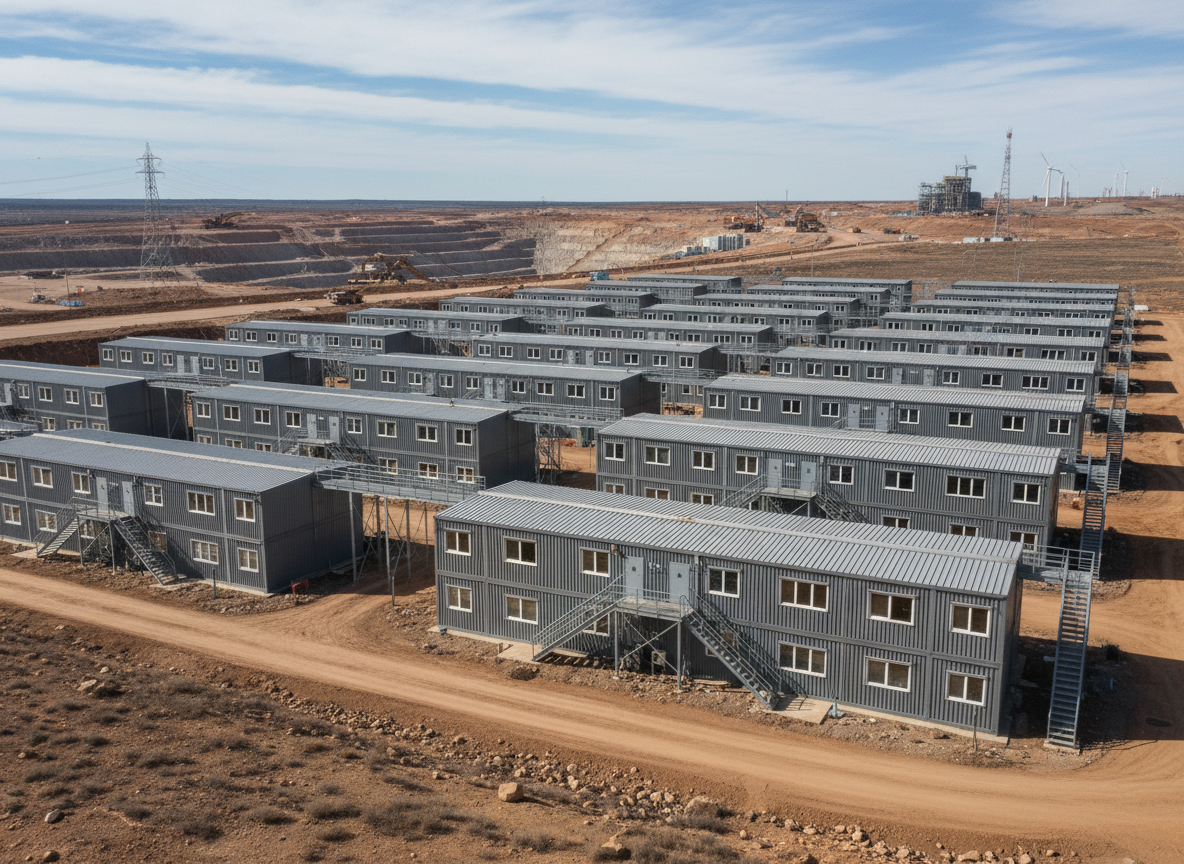
Worker dormitory buildings are a foundational component of any remote project site, providing essential accommodation for personnel. These structures must balance durability, functionality, and occupant comfort within demanding operational environments. Tough Modular specializes in providing dormitory solutions that are configured to specific project requirements, considering factors such as climate, occupancy density, logistical constraints, and site conditions. Our approach focuses on delivering resilient buildings designed for long-term service in remote and industrial settings, ensuring a consistent and reliable living environment for workforces.
The design and specification of worker dormitories involve careful consideration of various project parameters. This includes assessing the expected duration of the project, the number of personnel to be housed, and the specific needs for privacy, shared facilities, and overall living standards. We coordinate the manufacturing to align with these requirements, offering configurations that can range from individual rooms to multi-occupancy units, often integrated with common areas such as laundries, ablutions, and recreation spaces. The modular nature of these buildings facilitates efficient deployment and scalability, allowing for adjustments as project phases evolve or workforce numbers change.
Logistical planning is a critical aspect of supplying worker dormitory buildings to remote and industrial sites globally. Our coordination services encompass manufacturing oversight and international delivery logistics, ensuring that modules arrive on site ready for assembly. We address challenges related to transport restrictions, site access, and climate considerations to minimize delays and optimize the delivery process. The objective is to provide a comprehensive supply solution that integrates seamlessly with the overall project timeline, enabling rapid establishment of essential worker accommodation without compromising on structural integrity or functional design.
Beyond basic accommodation, modern worker dormitories are increasingly designed to support workforce well-being and retention. This includes considerations for natural light, ventilation, sound attenuation, and thermal performance, especially in extreme climates. We work with clients to define specifications that meet both operational needs and occupant comfort expectations, recognizing that a well-rested and supported workforce is crucial for project success. Our expertise lies in translating these diverse requirements into practical, durable modular building solutions that perform reliably in challenging conditions.
Technician insight
In global remote projects, the thing that often catches procurement teams out with worker dormitory buildings is underestimating the long-term impact of climate and site conditions on the building's operational lifespan and maintenance. A seemingly minor cost saving on material specification can lead to significantly higher operational costs and premature degradation in environments with high UV exposure, extreme temperature swings, or corrosive atmospheres. It's crucial to specify materials and construction methods that genuinely match the expected environmental stressors, rather than just the initial budget.
Worker Dormitory Buildings Services We Offer
✓Single-Module Dormitory Units
Compact, self-contained accommodation units suitable for individual occupancy or small groups, designed for rapid deployment and flexibility on site.
✓Multi-Module Joined Dormitories
Larger dormitory complexes created by joining multiple modular units, allowing for expanded capacity, shared facilities, and customized layouts.
✓Two-Storey Stacked Configurations
Vertical dormitory solutions that maximize accommodation density on sites with limited footprint, engineered for structural stability and access.
✓Integrated Ablution and Laundry Modules
Dedicated modular units for sanitation and laundry facilities, designed to be integrated within or adjacent to dormitory complexes for occupant convenience.
✓Flat-Pack Dormitory Options
Dormitory modules designed for efficient transport in disassembled form, reducing shipping volume and costs, particularly for remote or difficult-to-access locations.
✓Volumetric Dormitory Solutions
Fully assembled dormitory modules shipped as complete units, minimizing on-site construction time and labor for rapid project establishment.
How it works
- 1
Requirements Definition
We begin by thoroughly understanding your project's specific needs for worker accommodation, including workforce size, project duration, site conditions, climate, and any specific functional or regulatory requirements. This phase establishes the foundation for the entire project.
- 2
Scope Review and Configuration
Based on the defined requirements, we review potential modular building configurations and material specifications. This involves outlining layout options, material choices, and integration points for utilities, ensuring the proposed solution aligns with operational demands and budget parameters.
- 3
Technical Coordination
Our team coordinates the technical specifications with manufacturing partners to ensure all aspects of the dormitory buildings meet the agreed-upon design, structural considerations (e.g., wind, snow, seismic loads), and performance criteria. This includes detailing internal finishes and external cladding.
- 4
Manufacturing Coordination
We oversee the manufacturing process, ensuring adherence to quality standards and production schedules. Regular communication with manufacturing facilities helps maintain project timelines and addresses any production-related considerations promptly.
- 5
International Delivery Coordination
The final stage involves coordinating the logistics for international delivery to your project site. This includes managing freight, customs, and any specialized transport requirements to ensure the timely and secure arrival of the modular dormitory units.
Pricing
The cost of worker dormitory buildings is primarily influenced by the number of occupants, the complexity of the internal fit-out, the specified material durability for environmental conditions (e.g., extreme heat, cold, corrosion), and the logistical challenges of delivery to the project site.