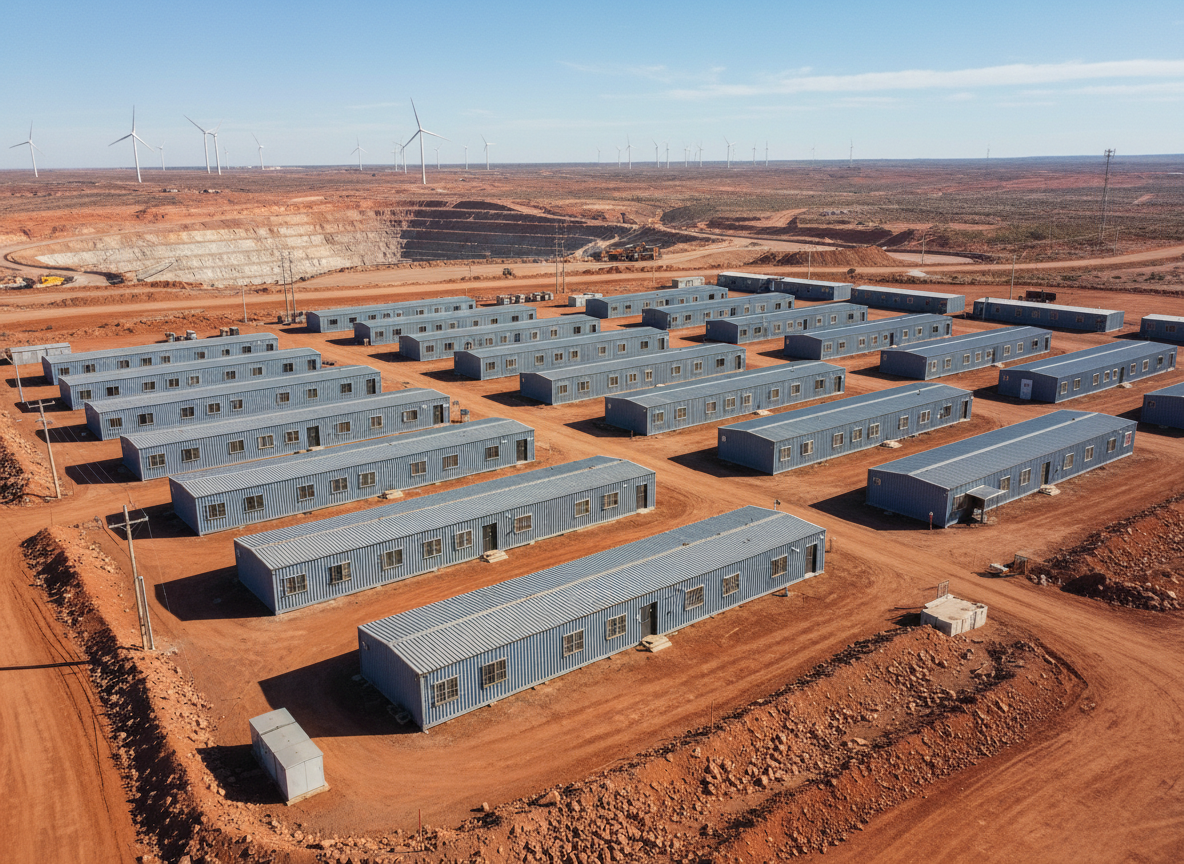
Developing a remote camp or project compound requires a comprehensive approach to ensure operational efficiency, personnel welfare, and project continuity in challenging environments. Tough Modular specializes in coordinating the supply of multi-building packages, encompassing all necessary facilities from accommodation and administrative offices to specialized technical and support structures. Our methodology focuses on understanding the project's unique demands, including climate, site conditions, logistical constraints, and operational timelines, to configure a cohesive and functional compound. This integrated approach minimizes coordination complexities for procurement teams and project managers, providing a single point of contact for the modular building supply chain.
The scope of a complete remote camp extends beyond basic shelter, integrating various building types into a functional ecosystem. This includes comfortable accommodation units, supervisor and management housing, fully equipped kitchens and dining facilities, ablution blocks, laundries, and medical clinics. Additionally, critical support infrastructure such as recreation facilities, security offices, workshops, technical buildings for power generation or communications, and storage solutions are integral to a self-sufficient compound. Each building type is specified considering its intended use, occupancy requirements, and the overall operational flow of the compound, ensuring a logical and efficient layout that supports project objectives and personnel well-being.
Effective planning for remote camps involves detailed consideration of the project lifecycle, from initial mobilization to potential demobilization. This includes assessing the suitability of volumetric or flat-pack module types based on transport limitations, site access, and installation methodologies. Design considerations extend to climate resilience, addressing extreme temperatures, snow loads, wind resistance, and seismic conditions where applicable. Furthermore, local code requirements for fire and life safety, accessibility, and environmental impact are incorporated into the building specifications. Our coordination services ensure that all components are manufactured to project specifications and delivered to site, ready for client-managed installation and commissioning.
Beyond the physical structures, a successful remote camp integrates operational functionality. This involves careful consideration of internal layouts, equipment integration, and utility connections that will be managed on-site by the client or local contractors. For instance, kitchen and dining facilities are designed for efficient food preparation and service for the projected workforce, while medical clinics are configured to support on-site health services. The overall compound design aims to create a safe, productive, and comfortable environment for personnel, contributing to project success in isolated or challenging locations. We work with project teams to define these requirements, ensuring the modular building supply aligns with the broader project execution plan.
Technician insight
When planning large-scale remote camps, a common oversight is underestimating the lead time required for specialized components or non-standard materials, especially when sourcing globally. This can impact critical path scheduling. Proactive engagement on long-lead items and a clear understanding of international logistics corridors are crucial to maintaining project timelines.
Complete Remote Camps and Project Compounds Services We Offer
✓Workforce Accommodation Modules
Configurable living quarters designed for personnel comfort and durability in remote settings, ranging from standard dormitories to supervisor and management suites.
✓Kitchen and Dining Facilities
Modular units configured for efficient food preparation, storage, and dining services, scalable to accommodate varying camp populations.
✓Ablution and Laundry Buildings
Integrated facilities providing hygienic sanitation, showering, and laundry services, designed for high traffic and robust operation.
✓Administrative and Office Complexes
Customizable modular office spaces, meeting rooms, and administrative hubs to support on-site project management and operational control.
✓Medical and First Aid Clinics
Dedicated modular units equipped for basic medical care, first aid, and emergency response in remote project environments.
✓Recreation and Welfare Facilities
Modular buildings designed to provide essential recreational spaces, break rooms, and welfare amenities for workforce well-being.
✓Technical and Support Buildings
Specialized modules for power generation, communications, workshops, security, and storage, integral to camp infrastructure.
How it works
- 1
Requirements Definition
We engage with your project team to thoroughly understand the specific needs for your remote camp or compound, including personnel numbers, operational duration, site conditions, climate, and functional requirements for each building type.
- 2
Scope Review and Configuration
Based on defined requirements, we review the project scope and propose suitable modular building configurations, layouts, and material specifications for accommodation, offices, and support facilities. This phase considers transport logistics and site-specific challenges.
- 3
Technical Coordination
Our team coordinates technical specifications, ensuring compliance with project-specific considerations such as wind, snow, seismic, and thermal performance. This includes detailed discussions on utility interfaces and equipment integration for client-managed site services.
- 4
Manufacturing Coordination
We coordinate the manufacturing process with our network of suppliers, overseeing production schedules and quality control to ensure buildings are fabricated to the agreed specifications and timelines.
- 5
International Delivery Coordination
We manage the complex logistics of international transport, coordinating shipping, customs, and delivery to your project site. This ensures timely arrival of modular units, ready for client-managed unloading and installation.
Pricing
The cost of a complete remote camp or project compound is primarily driven by the total number and type of modular units required, the complexity of their internal fit-out, material specifications for climate and operational demands, and the logistical challenges associated with international transport to the final project site. Project-specific engineering for environmental conditions and specialized equipment integration also influence the overall investment.