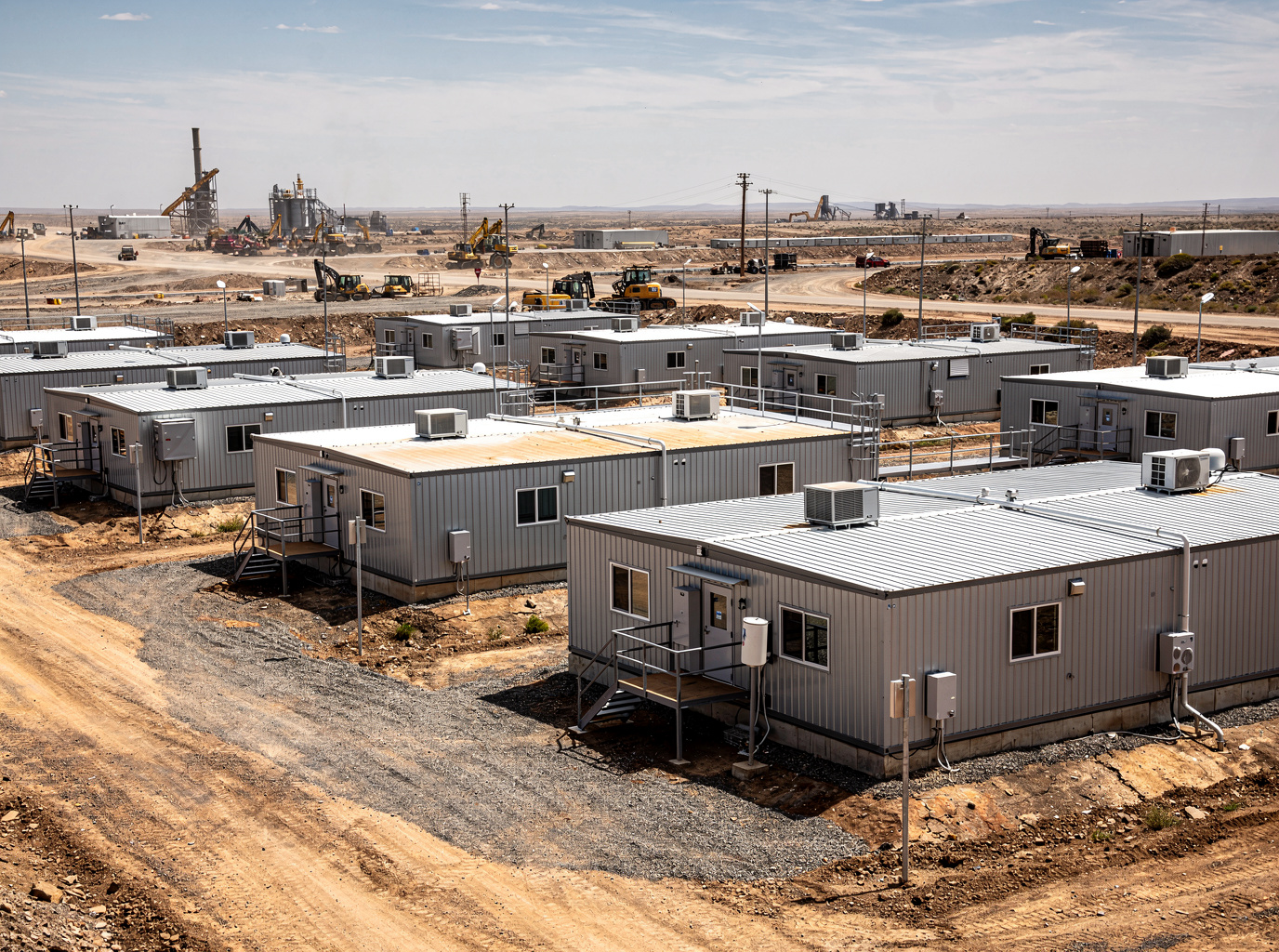
Surge accommodation refers to the temporary, often rapid, expansion of workforce housing capacity required for projects experiencing peak staffing demands, unexpected project delays, or emergency response situations. These scenarios necessitate flexible, re-deployable, and scalable living quarters that can be mobilized quickly and demobilized efficiently once the peak demand subsides. Effective surge accommodation planning minimizes project disruption, maintains workforce morale, and supports operational continuity by providing essential housing infrastructure on demand, without the long lead times associated with permanent construction.
The successful implementation of surge accommodation solutions hinges on understanding the project lifecycle and anticipating periods of heightened workforce presence. This includes phases such as initial construction, commissioning, specific operational campaigns, or post-incident recovery. Modular buildings are particularly well-suited for these applications due to their inherent off-site construction advantages, which allow for parallel manufacturing and site preparation, significantly reducing on-site construction time. The ability to configure and reconfigure units, from single-person dormitories to multi-occupancy rooms with shared facilities, provides the necessary adaptability for fluctuating project requirements.
Key considerations for surge accommodation include the speed of deployment, the ability to integrate with existing camp infrastructure, and the ease of relocation or expansion. Project specifications for surge accommodation often detail requirements for climate control, power distribution, water and wastewater management, and fire safety, all tailored to the expected duration of use and the specific environmental conditions of the project site. Material selection and structural design are also critical to ensure durability and suitability for repeated transport and assembly in demanding remote environments, while prioritizing occupant comfort and welfare during their temporary stay.
Technician insight
One common oversight with surge accommodation, particularly in projects with phased development, is underestimating the lead time required for manufacturing and international shipping. While modular buildings offer rapid deployment, the initial planning and production phase still demands adequate scheduling. Failing to factor this in often leads to last-minute rushes and compromises on preferred specifications.
Surge Accommodation Services We Offer
✓Single-Module Dormitories
Individual accommodation units designed for rapid deployment, providing private sleeping and living space for one or two occupants, often with integrated ablution facilities. These units are suitable for quick capacity additions.
✓Multi-Module Barracks
Larger accommodation blocks formed by joining multiple modular units, providing shared living spaces or multiple private rooms within a single structure. These are scalable for larger workforce groups.
✓Stackable Accommodation Units
Modular units designed for vertical stacking, allowing for increased accommodation density on sites with limited footprint. This configuration optimizes land use for larger temporary camps.
✓Relocatable Workforce Housing
Accommodation solutions engineered for ease of transport and re-assembly at different project sites. These units are designed for multiple deployments over their lifespan, supporting sequential project needs.
✓Integrated Ablution Modules
Dedicated modular units providing shower, toilet, and laundry facilities, designed to be integrated into or adjacent to accommodation blocks. These ensure essential hygiene services for temporary camps.
✓Flat-Pack Accommodation Systems
Modular units delivered in a disassembled, compact form for efficient transport, particularly to remote or difficult-to-access sites. Assembly occurs on-site, reducing shipping volume and cost.
How it works
- 1
Requirements Definition
The process begins with a detailed assessment of the project's surge accommodation needs, including anticipated workforce numbers, duration of peak demand, required living standards, and any specific site constraints or environmental conditions. This phase defines the scope and functional requirements for the modular buildings.
- 2
Scope Review and Configuration
Based on the defined requirements, we review potential modular building configurations, considering layouts, unit types (e.g., single-person rooms, multi-occupancy, shared facilities), and the overall camp layout. This involves identifying the most efficient and practical modular solution for the project's specific surge capacity needs.
- 3
Technical Coordination
We coordinate with the client and manufacturers to ensure that the proposed modular buildings meet the project's technical specifications. This includes reviewing requirements for structural integrity, utility connections (power, water, wastewater), HVAC systems, and any specific considerations for the operating environment, such as wind, snow, seismic conditions, or thermal performance.
- 4
Manufacturing Coordination
Once the designs are finalized and approved, we coordinate the manufacturing process with our network of specialized modular building producers. This involves managing production schedules, quality control checkpoints, and ensuring adherence to the agreed specifications and timelines.
- 5
International Delivery Coordination
The final stage involves coordinating the logistics for international delivery of the modular units to the project site. This includes planning transportation routes, managing shipping schedules, and preparing necessary documentation for transit. We work to optimize delivery efficiency while considering site accessibility and staging requirements.
Pricing
The cost of surge accommodation solutions is primarily driven by the quantity and type of modular units required, the complexity of their internal fit-out, the chosen structural and material specifications to meet project conditions, and the logistical challenges associated with international transport to the project site.