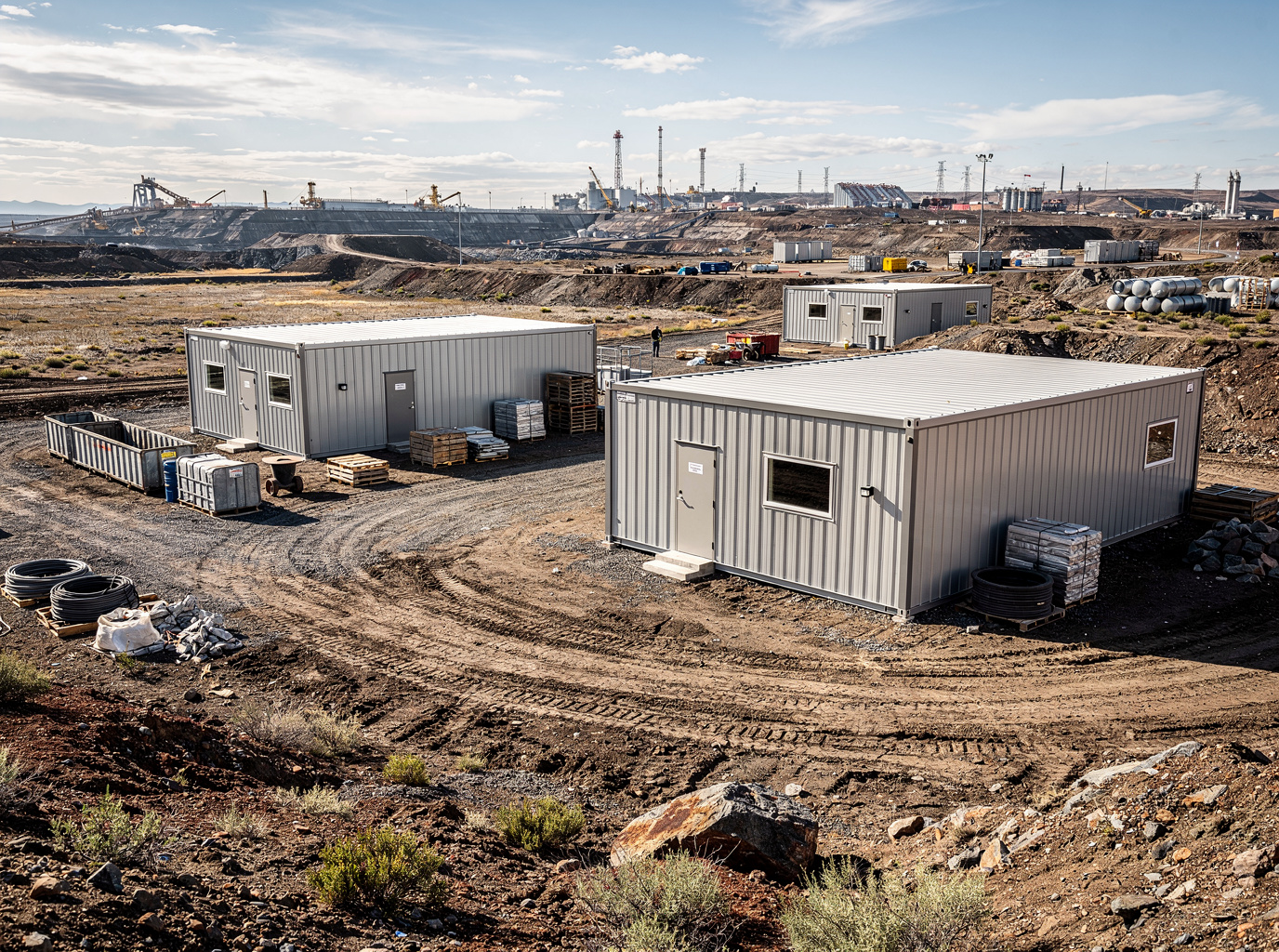
Modular storage buildings are essential components of any remote or industrial project, providing secure and organized space for equipment, materials, spare parts, and hazardous substances. These structures are engineered for rapid deployment and relocation, offering a flexible alternative to traditional construction. Tough Modular coordinates the supply of storage units that can be configured to meet specific project requirements, whether for a temporary construction site, a long-term mining operation, or a renewable energy installation. Considerations for these buildings include the type of materials to be stored, required security levels, environmental conditions, and potential future re-deployment.
Effective storage solutions contribute to operational efficiency and site safety. Our approach involves understanding the project's storage volume needs, the nature of the items to be stored (e.g., general supplies, heavy machinery components, flammable liquids), and any specific environmental controls required, such as climate regulation for sensitive equipment or ventilation for chemical storage. We coordinate with manufacturers to ensure that the modular units are specified with appropriate structural integrity, access points, and internal configurations, including shelving, racking, and partitioning, to maximize utility and organization on site.
The selection of modular storage buildings involves evaluating various factors, including the project timeline, budget, and logistical constraints. Tough Modular facilitates the sourcing and supply of units that can withstand challenging remote and industrial environments, coordinating manufacturing to align with project schedules. We focus on solutions that offer durability and functionality, ensuring that the buildings provide reliable protection for valuable assets and maintain operational continuity. This includes planning for transportability and potential future expansion or relocation of the storage facilities.
For projects requiring specialized storage, such as those involving hazardous materials or high-value equipment, detailed specifications are developed in coordination with the client and manufacturer's engineers. This ensures compliance with project-specific safety protocols and operational requirements. Our coordination extends to multi-building packages, where storage units are integrated into larger project compounds, providing a cohesive and functional site layout. The objective is to deliver storage solutions that are not only fit-for-purpose but also contribute to the overall efficiency and safety of the project site.
Technician insight
When planning for modular storage buildings on a global project, a common oversight is underestimating the lead time required for specialized components, particularly for hazardous material storage or climate-controlled units. These often require specific certifications or longer fabrication times, impacting overall project schedules if not accounted for early in the procurement phase. Early engagement with manufacturers for these specialized requirements is crucial.
Modular Storage Buildings Services We Offer
✓General Storage Modules
Standard modular units designed for the secure storage of general equipment, tools, and non-perishable supplies on project sites.
✓Hazardous Material Storage
Specialized modular buildings configured with enhanced ventilation, spill containment, and fire suppression considerations for the safe storage of fuels, chemicals, and other dangerous goods.
✓Warehouse and Laydown Area Support
Larger modular storage solutions designed to support main warehouse operations or provide covered laydown areas for oversized equipment and materials.
✓Climate-Controlled Storage
Modular units equipped with HVAC systems to maintain specific temperature and humidity levels for sensitive instruments, electronic components, or perishable items.
✓Secure Tool Cribs
Compact, highly secure modular buildings designed for the organized storage and controlled distribution of tools and small equipment.
✓Spare Parts Depots
Modular buildings configured with shelving and inventory management considerations to serve as on-site depots for critical spare parts, minimizing downtime.
How it works
- 1
Requirements Definition
We begin by thoroughly understanding your project's storage needs, including the type and volume of materials, required security levels, environmental considerations, and project timeline. This phase establishes the foundational specifications for the modular storage buildings.
- 2
Scope Review and Configuration
Based on the defined requirements, we review the scope of work and coordinate with manufacturers to identify suitable modular building configurations. This involves selecting appropriate unit sizes, internal layouts, access points, and any specialized features such as climate control or hazardous material considerations.
- 3
Technical Coordination
Tough Modular facilitates technical coordination between your project team and the manufacturer's engineers. This ensures that all specifications, including structural considerations, utility interfaces, and any specific performance requirements, are accurately translated into the building design for manufacturing.
- 4
Manufacturing Coordination
We coordinate the manufacturing process, aligning production schedules with your project's overall timeline. This involves monitoring progress to ensure that the modular storage buildings are constructed according to agreed-upon specifications and quality standards.
- 5
International Delivery Coordination
Tough Modular manages the complex logistics of international delivery, coordinating shipping and transport to your project site. This includes planning for route surveys, transport restrictions, and ensuring all necessary documentation is prepared for a smooth delivery process.
Pricing
The cost of modular storage buildings is primarily influenced by their size, the complexity of internal fit-out (e.g., specialized racking, climate control systems), material specifications for environmental resilience, and the logistical challenges associated with delivery to remote or demanding project locations.