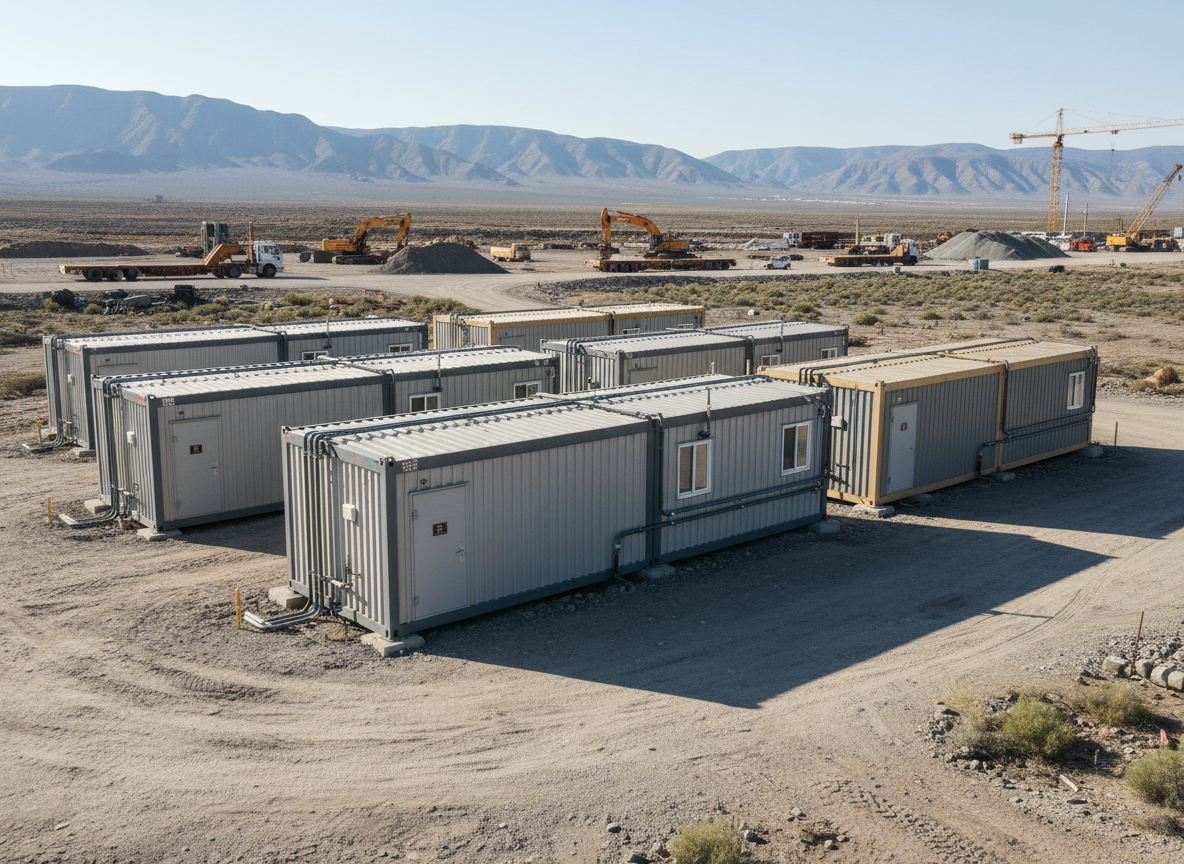
Power and utility projects, encompassing generation, transmission, and distribution, often operate in remote, challenging environments with strict operational requirements and aggressive timelines. Tough Modular provides modular building solutions designed to support these critical infrastructure developments. Our offerings include project-specific configurations for control rooms, operator shelters, equipment enclosures, substations, and essential support facilities such as administrative offices, accommodation camps, and welfare units. These buildings are coordinated to meet the specific demands of each project phase, from initial construction to long-term operational support, ensuring functional and robust spaces for personnel and sensitive equipment.
The complexity of power and utility projects necessitates a detailed understanding of site conditions, operational needs, and logistical constraints. We coordinate the supply of modular buildings that integrate with the broader project infrastructure, considering factors such as site access, climate extremes, and the need for rapid deployment. This includes coordinating manufacturing to align with project schedules and managing international delivery logistics to ensure timely arrival at project sites globally. Our focus is on providing reliable, fit-for-purpose modular structures that contribute to the efficiency and safety of power and utility operations, minimizing on-site construction complexity and accelerating project timelines.
Effective planning and coordination are paramount for successful modular building integration in power and utility sectors. We engage with procurement teams, project managers, and engineers to define precise building specifications, ensuring that the modular units are aligned with functional requirements, space utilization, and any project-specific equipment integration needs. This collaborative approach extends to coordinating manufacturing processes and international shipping, addressing potential challenges proactively. The objective is to deliver comprehensive modular building packages that support the demanding operational environments of power generation, transmission, and distribution projects, from remote substations to large-scale power plant compounds.
Technician insight
A common challenge in power and utility projects is accurately forecasting the interface requirements for specialized equipment within the modular buildings. It's crucial to obtain detailed equipment specifications and layout drawings early in the planning phase to ensure all necessary structural supports, utility penetrations, and access points are incorporated during manufacturing, preventing costly on-site modifications.
Modular Buildings for Power and Utility Projects Services We Offer
✓Control Room Modules
Modular units configured for housing critical control systems and operator workstations, designed for integration with power generation and distribution infrastructure.
✓Substation Equipment Enclosures
Robust modular enclosures for protecting electrical equipment, switchgear, and control apparatus at substations and transmission facilities.
✓Operator Shelters and Offices
Self-contained modular offices and shelters providing secure and climate-controlled environments for on-site personnel and administrative functions at utility sites.
✓Accommodation and Welfare Facilities
Modular living quarters, dining halls, ablution blocks, and recreation units to support personnel working on remote power and utility projects.
✓Technical and Storage Buildings
Specialized modular buildings for housing technical equipment, workshops, and secure storage for tools and materials on project sites.
✓Multi-Building Project Compounds
Coordinated packages of multiple modular buildings to form complete operational and living compounds for large-scale power and utility developments.
How it works
- 1
Requirements Definition
Detailed consultation to understand project scope, site conditions, functional requirements, occupancy needs, and any specific equipment integration for power and utility applications.
- 2
Scope and Specification Review
Collaborative review of defined requirements, including consideration of climate, site access, operational use, and potential local code implications, to develop a comprehensive modular building specification.
- 3
Configuration and Layout Planning
Development of preliminary building configurations, internal layouts, and material specifications, ensuring alignment with project functional and logistical demands.
- 4
Technical Coordination
Coordination with client project teams, manufacturer's engineers, and relevant specialists to finalize technical details, including interfaces for utilities, equipment, and structural considerations.
- 5
Manufacturing Coordination
Management of the manufacturing process, ensuring adherence to agreed specifications, quality parameters, and production schedules for timely project delivery.
- 6
International Delivery Coordination
Logistical planning and coordination for the international transport of modular units to the project site, considering route surveys and site access constraints.
Pricing
The cost of modular buildings for power and utility projects is primarily influenced by the complexity of the building configuration, specialized equipment integration requirements, material specifications, the total number of modules, and international shipping distances. Project-specific requirements for internal fit-out, environmental controls, and structural considerations also significantly impact the overall investment.