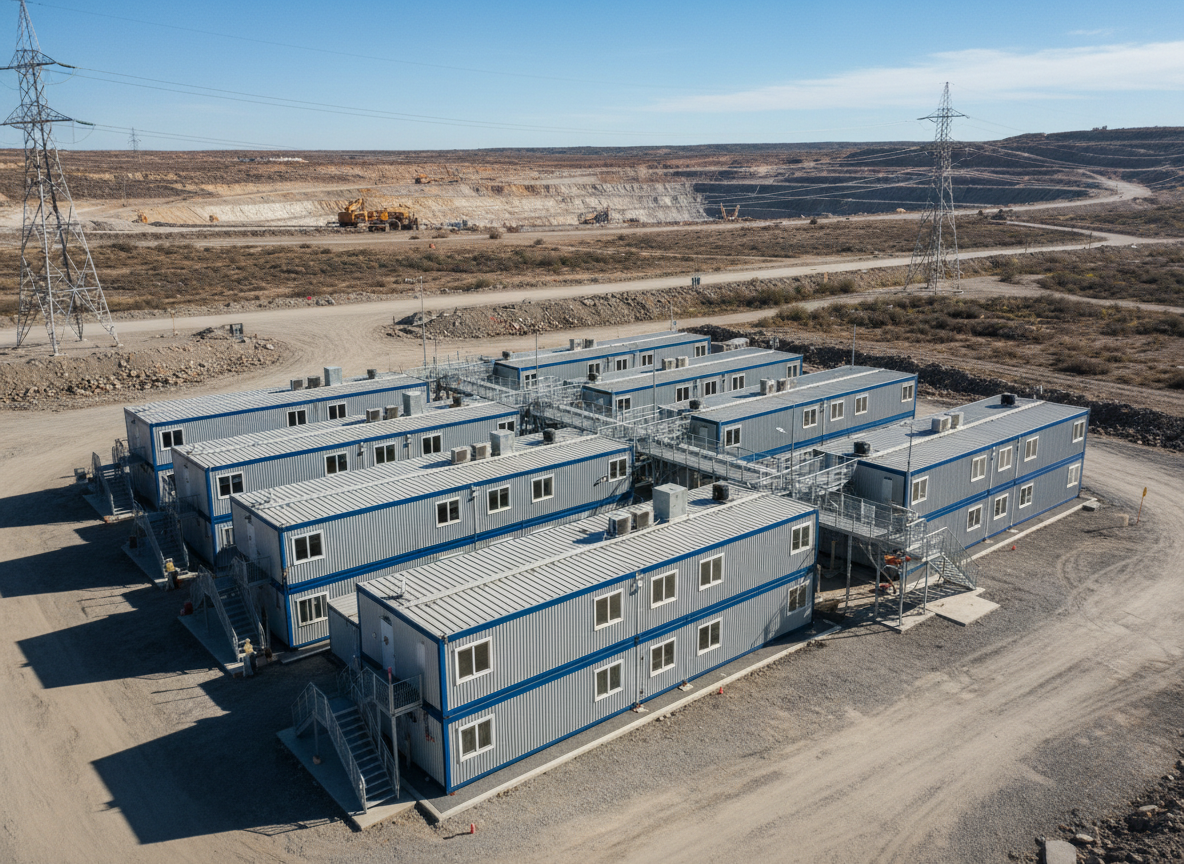
Fly-In/Fly-Out (FIFO) operations present distinct challenges for project managers and procurement teams, requiring robust and rapidly deployable infrastructure in remote and often harsh environments. Modular buildings offer a strategic advantage for FIFO camps by providing scalable, relocatable, and purpose-built facilities that can be configured to meet the specific demands of project duration, workforce numbers, and site conditions. This includes accommodation units, administrative offices, medical clinics, and various support buildings, all designed for efficient transport and assembly.
The successful implementation of a FIFO modular camp hinges on meticulous planning and coordination, from initial project specification through to manufacturing and international logistics. Key considerations include the anticipated project lifespan, the rotation schedule of personnel, and the need for facilities that support both operational efficiency and worker welfare. Our process focuses on understanding these factors to coordinate the supply of modular units that integrate seamlessly into the overall project timeline and operational requirements, minimizing on-site disruption.
Modular solutions for FIFO operations must address a range of technical and logistical complexities. This involves defining project requirements related to climate, site access, and local regulations, which inform the modular building specifications. The selection of materials, insulation, and internal layouts are crucial for ensuring comfort and functionality in varied conditions, from arid deserts to sub-arctic regions. Furthermore, the modular nature allows for phased deployment, enabling facilities to expand or contract in alignment with project milestones and workforce fluctuations.
Effective supply chain management is paramount for FIFO projects. Tough Modular specializes in coordinating the manufacturing of modular units to project specifications and managing the complex logistics of international delivery to remote sites. This includes navigating varied transport restrictions and customs requirements to ensure timely arrival. Our focus is on providing a streamlined procurement experience, ensuring that the modular buildings are ready for the client's local contractors to receive, position, and connect on-site.
Technician insight
When planning modular camps for FIFO operations, a common oversight is underestimating the lead time required for international shipping and customs clearance to remote locations. It's not just about manufacturing time; the transit time across continents and through various ports, coupled with potential delays at customs, can significantly impact project schedules if not factored in meticulously from the outset. Early engagement on logistics planning is critical.
Modular Buildings for FIFO Operations Services We Offer
✓Workforce Accommodation Units
Modular units designed for comfortable and functional living spaces for FIFO personnel, configurable for single or multi-occupancy, with options for integrated ablution facilities.
✓Administrative and Site Offices
Modular office buildings providing essential workspaces for project management, engineering, and administrative staff, with layouts adaptable to various team sizes and functions.
✓Kitchen and Dining Facilities
Modular solutions for food preparation, storage, and dining areas, designed to support the catering needs of FIFO camps of varying capacities.
✓Ablution and Laundry Buildings
Dedicated modular units for sanitation and laundry services, configured with fixtures and equipment suitable for remote site operations and personnel requirements.
✓Recreation and Welfare Buildings
Modular spaces intended for personnel relaxation, fitness, and social interaction, contributing to overall well-being in remote FIFO environments.
✓Medical and First Aid Clinics
Purpose-built modular clinics for on-site medical support, designed to accommodate essential equipment and provide a controlled environment for health services.
How it works
- 1
Define Project Requirements
We begin by thoroughly understanding your project's specific needs, including workforce size, project duration, site climate, logistical constraints, and functional requirements for each modular building type. This initial phase establishes the foundation for the entire supply process.
- 2
Scope Review and Specification
Based on the defined requirements, we collaborate to refine the scope of work, detailing the types of modular units, their configurations, and specific technical specifications. This ensures alignment with operational needs and project objectives.
- 3
Configuration and Layout Planning
Our team assists in planning the optimal configuration and internal layouts for individual modules and multi-building complexes. This includes considering operational flow, personnel comfort, and efficient use of space within the camp footprint.
- 4
Technical Coordination with Manufacturers
We coordinate directly with manufacturing partners to translate project specifications into detailed production plans. This involves ensuring that all technical requirements, material selections, and quality standards are met during the fabrication process.
- 5
Manufacturing Oversight and Quality Assurance
During the manufacturing phase, we maintain oversight to ensure production adheres to agreed-upon specifications and quality benchmarks. This coordination helps mitigate potential issues before units are dispatched.
- 6
International Delivery Coordination
We manage the complex logistics of international transport, coordinating shipping, customs documentation, and delivery to the designated remote site. Our focus is on ensuring a timely and efficient delivery process, ready for your local site team to manage offloading and installation.
Pricing
The cost of modular buildings for FIFO operations is influenced by factors such as the number and type of units, internal fit-out specifications, required structural enhancements for specific environmental conditions (e.g., wind, snow, seismic considerations), chosen materials, and the complexity of international logistics to the final site.