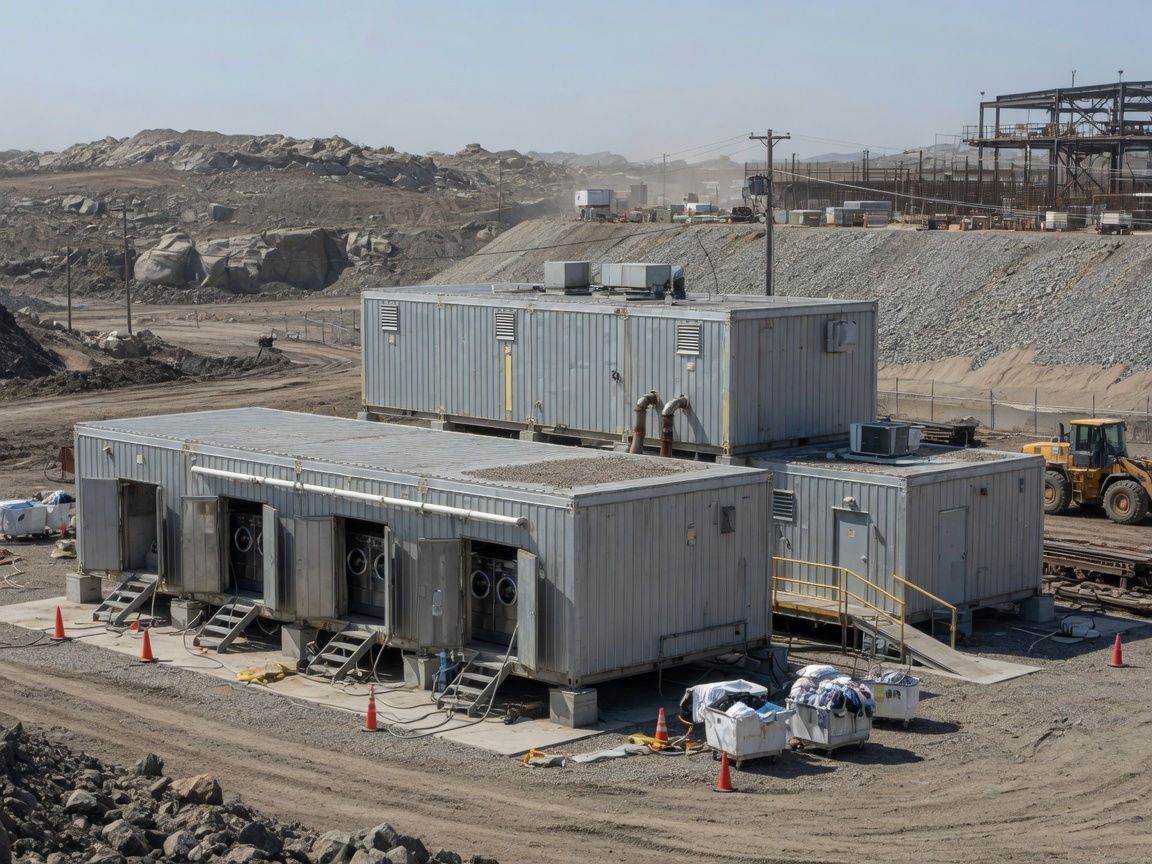
Modular laundry buildings are critical infrastructure for remote camps and industrial project sites, supporting the well-being of personnel and the efficient operation of facilities. These buildings are designed to integrate seamlessly into multi-building project compounds, offering dedicated spaces for washing, drying, and linen management. The configuration of a modular laundry facility considers the anticipated personnel count, operational hours, and specific equipment requirements, ensuring adequate capacity and workflow efficiency. Attention is given to the internal layout for optimal placement of commercial-grade laundry equipment, utility connections, and ergonomic considerations for staff.
The planning and sourcing of modular laundry buildings involve a detailed understanding of project-specific conditions. This includes assessing the climate, which influences thermal insulation and HVAC requirements, and considering the availability and quality of water and power sources. Project specifications may also define requirements related to waste water management, ventilation, and fire suppression systems. Tough Modular coordinates the manufacturing and international delivery of these units, ensuring they are prepared for assembly and integration into the broader site infrastructure. The modular approach allows for scalable solutions, from single-module units for smaller teams to multi-module complexes for large-scale operations.
Effective integration of laundry facilities within a remote camp environment contributes significantly to overall site hygiene and personnel morale. These buildings are designed to accommodate heavy-duty, industrial washing machines and dryers, along with sorting areas, folding stations, and storage for detergents and clean linens. Considerations for durability and ease of maintenance are paramount, given the demanding operational conditions often found on remote sites. Tough Modular works with clients to define the project specification, which may address factors such as internal finishes, flooring materials, and access for equipment servicing, to ensure the facility meets the long-term operational needs of the project.
The selection of modular laundry buildings also involves defining requirements for transport and on-site assembly. Depending on the project location and site access, units can be configured for volumetric shipment or as flat-pack systems requiring on-site assembly. These considerations impact logistics planning and the overall project schedule. Coordination of manufacturing timelines with delivery schedules is crucial for timely project execution. Tough Modular facilitates this coordination, providing a streamlined process from initial specification through to delivery at the project site, ready for client-managed installation and commissioning.
Technician insight
On remote industrial projects, a common oversight with laundry buildings is underestimating the wastewater management requirements. The sheer volume of greywater generated by commercial washing machines, especially with hard water or specific detergents, can quickly overwhelm standard septic or treatment systems if not properly accounted for in the initial site planning and utility design.
Laundry Buildings Services We Offer
✓Single-Module Laundry Units
Compact, self-contained modular units suitable for smaller remote sites or as supplementary facilities, designed for efficient transport and rapid deployment.
✓Multi-Module Laundry Complexes
Interconnected modular buildings configured to create larger laundry facilities, providing expanded capacity and specialized areas for sorting, washing, drying, and folding.
✓Commercial Equipment Integration
Coordination of building design to accommodate client-specified commercial-grade washing machines, dryers, and associated utility connections.
✓Heavy-Duty Flooring Solutions
Specification of durable, impact-resistant, and moisture-tolerant flooring materials suitable for high-traffic laundry operations and potential water exposure.
✓Ventilation and Humidity Control
Design considerations for effective ventilation systems to manage heat and humidity, ensuring comfortable working conditions and equipment longevity.
✓Utility Connection Provisions
Pre-engineered points for connecting water supply, wastewater drainage, electrical power, and potentially gas lines for laundry equipment, specified per project.
How it works
- 1
Define Project Requirements
Collaborate with your team to detail the specific needs for the laundry facility, including anticipated personnel count, required equipment, operational hours, and site conditions. This includes considering climate, utility availability, and any specific health and safety protocols.
- 2
Scope Review and Configuration
Review the project specification to determine the optimal modular building configuration, internal layout, and material specifications. This phase refines the scope to align with operational demands and logistical constraints.
- 3
Technical Coordination
Engage with the manufacturer's engineering teams to ensure the modular building design incorporates all specified utility connections, structural considerations, and internal finishes. This includes provisions for client-supplied laundry equipment.
- 4
Manufacturing Coordination
Oversee the manufacturing process, ensuring adherence to the agreed-upon specifications and quality benchmarks. Regular communication maintains transparency and addresses any production-related queries.
- 5
International Delivery Coordination
Manage the logistics of transporting the modular units from the manufacturing facility to the designated project site. This involves coordinating shipping, customs documentation, and route planning to ensure timely and secure delivery.
Pricing
The cost of modular laundry buildings is influenced by factors such as the number of modules, internal fit-out specifications, type of flooring, complexity of utility provisions, and the final destination's logistical challenges. Specialized ventilation systems or heavy-duty internal finishes also contribute to the overall project cost.