2026-09-24 ·
Flat-Pack vs Volumetric Modular Buildings
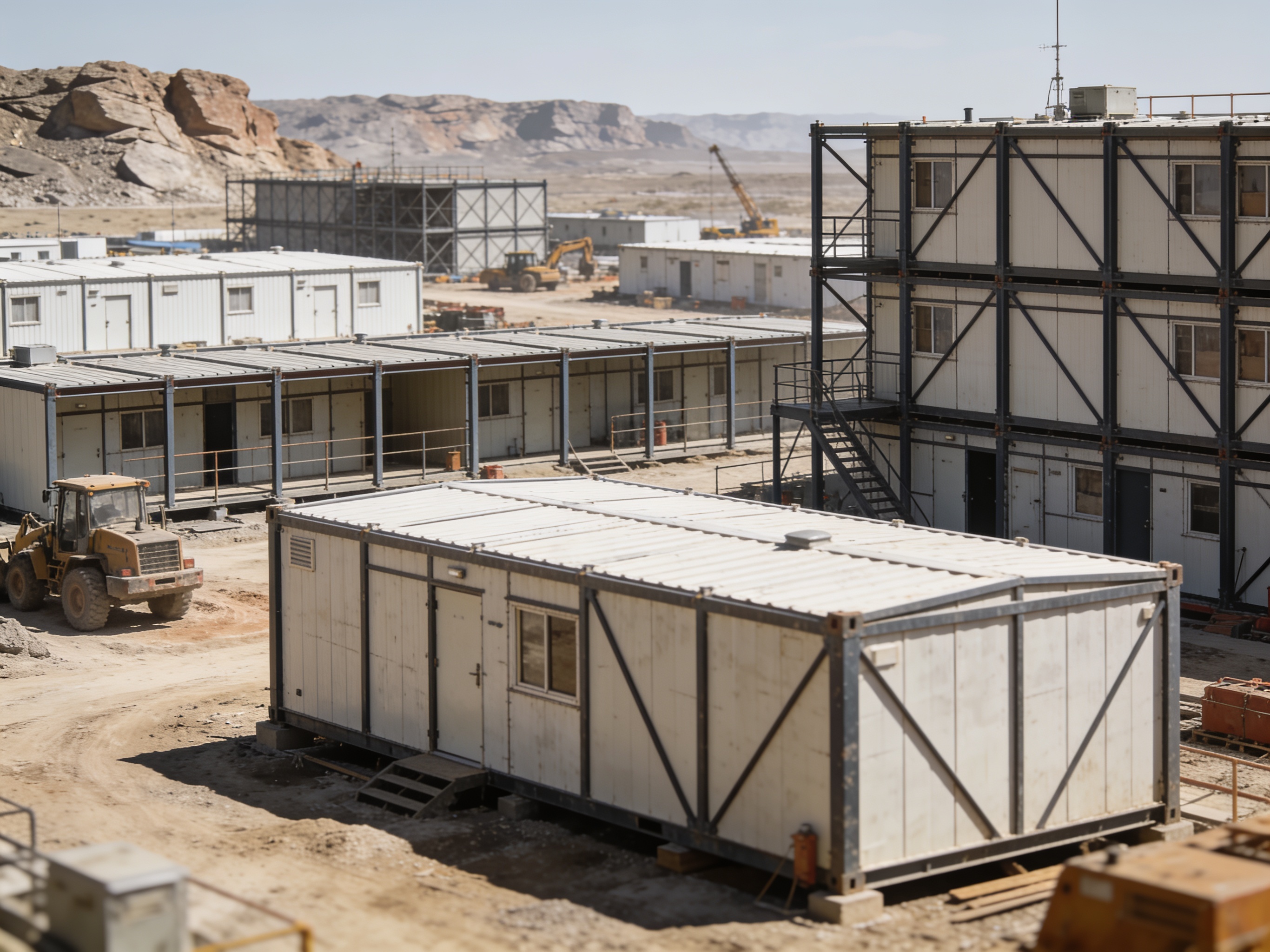
When evaluating modular building solutions for remote industrial, mining, energy, or infrastructure projects, procurement teams frequently weigh the merits of flat-pack modular buildings against volumetric modular buildings. The primary distinction lies in their level of pre-assembly: flat-pack units are shipped as disassembled components for on-site construction, while volumetric units are shipped as fully or partially assembled 3D modules. This fundamental difference impacts everything from transportation logistics and site preparation to assembly time and overall project costs. Understanding these variations is essential for project managers and engineers to select the most suitable building system for their specific operational requirements and budget constraints, particularly for challenging environments such as those found in cold-climate and arctic modular buildings or desert regions.
Flat-Pack Modular Buildings: Efficiency in Transport
Flat-pack modular buildings, also known as panelized or knock-down systems, consist of wall, floor, and roof panels, along with structural components, windows, doors, and interior finishes, all shipped in a disassembled state. This method is highly efficient for transportation, as multiple units can be stacked and shipped together on a single truck, container, or vessel. This significantly reduces shipping volume and, consequently, freight costs, especially for projects in extremely remote or logistically challenging locations. The compact nature of flat-pack shipments makes them ideal for projects requiring transport over long distances, through difficult terrain, or to sites with limited access points. This transport efficiency is often a primary driver for their selection in large-scale modular workforce accommodation projects or extensive remote camps and project compounds where hundreds of units may be required.
However, the trade-off for this transportation efficiency is a greater requirement for on-site assembly. While the components are prefabricated, the actual construction of the building takes place at the project site, involving more labor and potentially longer assembly times compared to volumetric units. Project teams must account for the availability of skilled labor, appropriate lifting equipment, and suitable weather conditions during the assembly phase. The components are designed for straightforward assembly, often using standardized connections, but the process still demands careful coordination and adherence to detailed instructions to ensure structural integrity and proper sealing against environmental factors.
Volumetric Modular Buildings: Speed and Quality Control
Volumetric modular buildings are constructed as three-dimensional modules, often fully fitted out with electrical, plumbing, and HVAC systems, as well as interior finishes, in a controlled factory environment. These modules are then transported to the site and craned into place, ready for connection to utilities and other modules. The primary advantage of this approach is the significantly reduced on-site construction time. Once the site is prepared, modules can be installed and connected rapidly, allowing for quicker project completion and earlier occupancy. This speed of deployment is particularly beneficial for projects with tight deadlines or those in harsh environments where minimizing on-site work exposure is critical, such as modular buildings for mining and minerals operations.
Another key benefit of volumetric construction is the enhanced quality control achieved in a factory setting. Manufacturing in a controlled environment minimizes exposure to adverse weather, reduces material waste, and allows for consistent quality checks throughout the production process. This can lead to a more robust and durable product. However, the fully assembled nature of volumetric modules means they are bulkier and heavier to transport than flat-pack units. This can result in higher shipping costs, especially for distant sites, and may necessitate specialized transport equipment and route planning to accommodate oversized loads. Site access for large cranes and transport vehicles is also a more significant consideration for volumetric projects.
Key Considerations for Project Selection
When deciding between flat-pack and volumetric modular solutions, procurement and project managers should evaluate several critical factors. Transportation costs and logistics are paramount; for extremely remote sites or those with restricted access, the compact shipping of flat-pack units often presents a more economical and feasible option. Conversely, if the project timeline is aggressive and site access is straightforward, the rapid deployment of volumetric modules may be preferred. On-site labor availability and skill sets also play a role; flat-pack systems require a larger on-site crew and more extended assembly periods, whereas volumetric units primarily need a skilled team for installation and utility connections. The level of fit-out and customization required can also influence the choice. Volumetric modules typically offer a higher degree of factory-finished interiors, while flat-pack systems allow for more flexibility in on-site finishing, though this adds to the site work scope. For example, specific requirements for modular site offices or specialized facilities might lean one way or the other.
Defining Project Specifications for Optimal Choice
To make an informed decision, project teams should clearly define their project specifications. This includes detailing the required building functions (e.g., accommodation, offices, medical facilities), the number of units, the expected lifespan, and any specific interior or exterior finish requirements. Crucially, specify the logistical constraints of the site, including road access limitations, port availability, and any weight or dimension restrictions for transport. Outline the desired project timeline for delivery and occupancy, as this directly impacts the feasibility of each modular type. Provide details on available on-site resources, such as equipment (cranes, forklifts) and labor. By providing comprehensive specifications, project teams enable modular building suppliers to recommend the most appropriate and cost-effective solution, whether it's a flat-pack system optimized for transport or a volumetric solution designed for rapid deployment. Consider discussing your project with Tough Modular to refine these specifications.
Ultimately, the choice between flat-pack and volumetric modular buildings depends on a careful assessment of project-specific needs, logistical challenges, budget, and timeline. Both options offer distinct advantages, and the optimal solution is the one that best aligns with the unique demands of the remote or industrial project site.