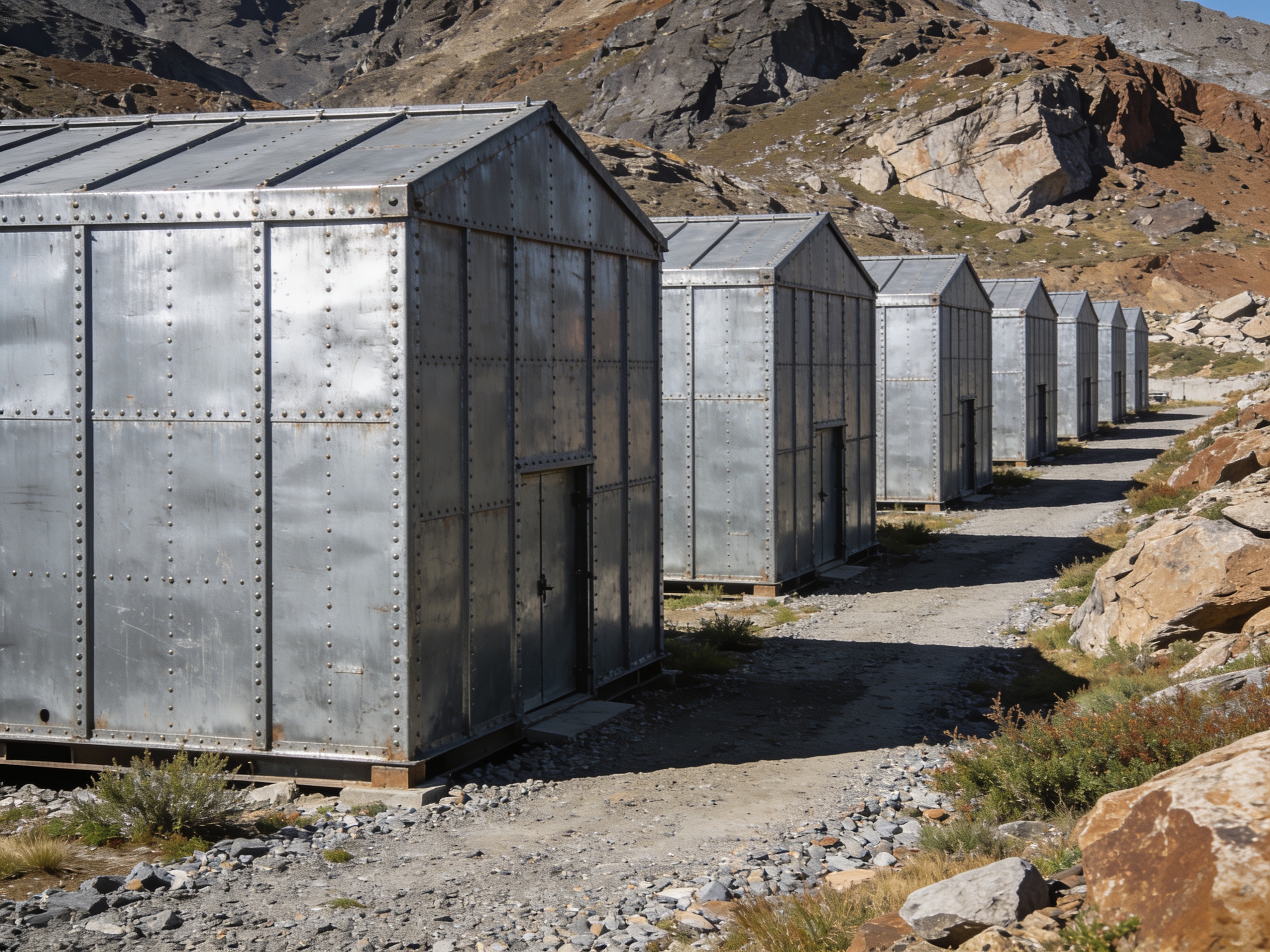
Namibia presents a unique environment for large-scale industrial and resource extraction projects, often characterized by remote locations and demanding climates. The country's economy is heavily reliant on mining, particularly diamonds, uranium, copper, and zinc, with significant exploration activity in oil and gas. These sectors necessitate robust, rapidly deployable infrastructure for workforce accommodation, site offices, and specialized technical buildings. Modular construction offers a strategic advantage in this context, providing durable solutions that can withstand the arid to semi-arid conditions and the logistical complexities of operating in vast, sparsely populated regions.
Project development in Namibia, whether for new mines in the Erongo Region or energy installations in the coastal areas, frequently involves establishing complete project compounds in areas with limited existing infrastructure. This requires careful planning for everything from power generation to water and waste management. Modular buildings are designed to integrate seamlessly into these self-sufficient ecosystems, offering flexibility for expansion or relocation as project phases evolve. Their inherent portability and pre-engineered nature significantly reduce on-site construction time and labor requirements, which is particularly beneficial given the distances involved in transporting materials and personnel.
The diverse terrain of Namibia, ranging from the Namib Desert along the coast to the Kalahari Desert in the east, and the central plateau, dictates specific engineering considerations for modular structures. Buildings must be designed to cope with extreme temperatures, dust, and in some areas, strong winds. Logistics are a critical factor, with primary ports like Walvis Bay serving as key entry points for materials, followed by extensive inland road transport. The ability to deploy modular units that are resilient, easily transportable, and quick to assemble is paramount for maintaining project schedules and ensuring the well-being of the workforce in these challenging environments.
Around Namibia
We regularly work near:
- 📍Walvis Bay Port
- 📍Rössing Uranium Mine
- 📍Husab Mine
- 📍Skorpion Zinc Mine
- 📍Lüderitz Port
- 📍Kudu Gas Field
Modular Buildings in Namibia — Local Notes
- •Logistics and Transport: Namibia's vast distances and often unpaved roads beyond major routes necessitate robust transport planning for modular units. Primary entry is via the port of Walvis Bay, requiring onward road freight to project sites, often traversing hundreds of kilometers.
- •Climate Resilience: Modular buildings must be engineered to withstand Namibia's extreme climatic conditions, including high daytime temperatures, significant diurnal temperature swings, dust intrusion, and in certain regions, strong winds. Insulation and air filtration are critical.
- •Workforce Accommodation Standards: Remote project sites often require comprehensive camp facilities, including accommodation, catering, medical, and recreational amenities. Modular solutions must integrate these functions efficiently to support large workforces over extended periods.
- •Site-Specific Considerations: Due to the remote nature of many projects, site preparation for modular installations often involves significant earthworks and foundation work. Local geological conditions, such as sandy soils or rocky outcrops, must be assessed for suitable foundation design.