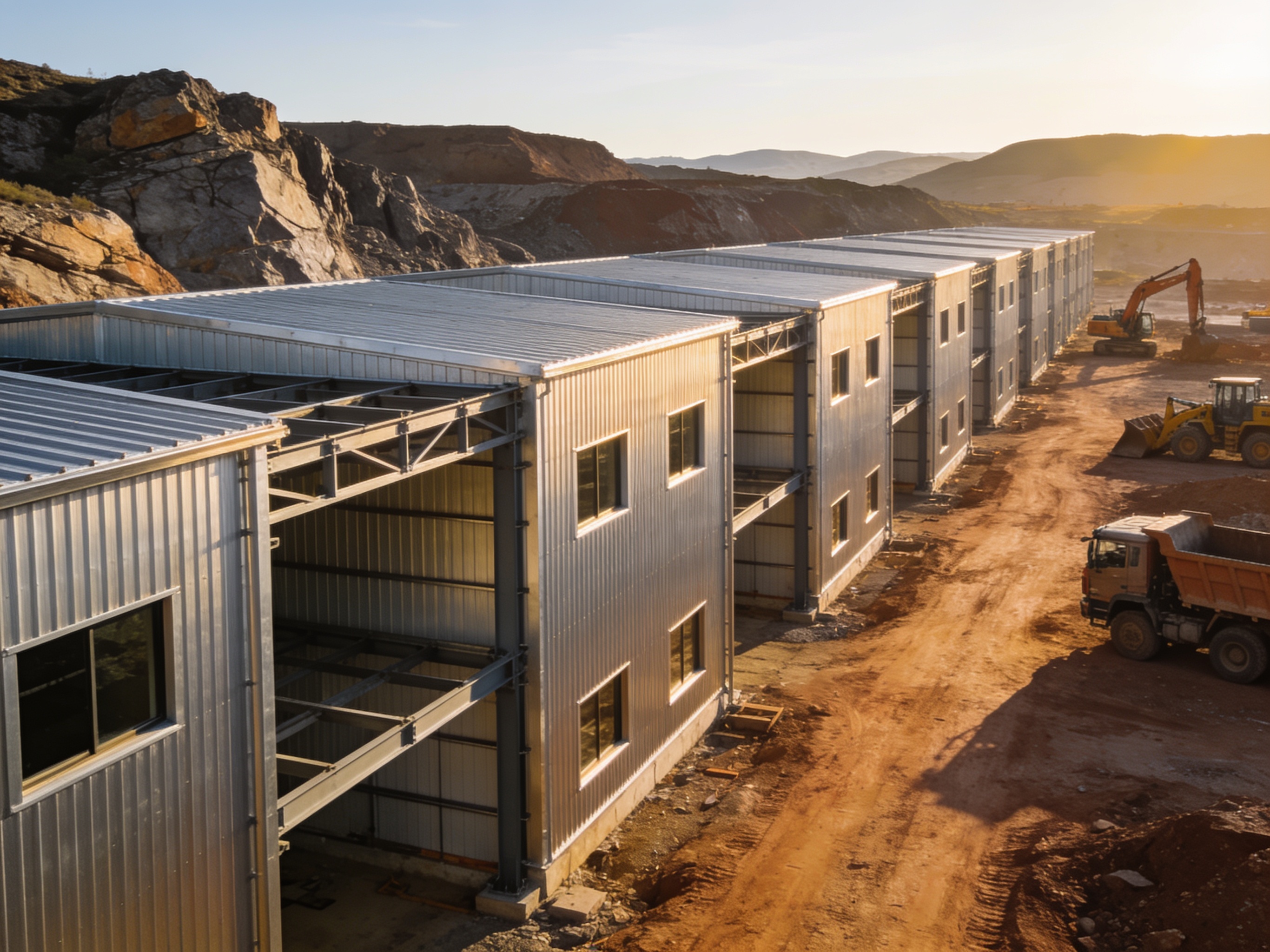
The Democratic Republic of the Congo (DRC) presents unique challenges and opportunities for industrial and remote project development. Its vast mineral wealth, including significant deposits of copper, cobalt, gold, and diamonds, drives extensive mining operations across provinces like Haut-Katanga and Lualaba. These projects often require rapid deployment of resilient infrastructure for workforce accommodation, site offices, and technical facilities in remote, often challenging, environments. Modular building solutions offer a strategic advantage by providing quick-to-deploy, scalable, and durable structures essential for establishing and maintaining operations in areas with limited existing infrastructure.
Beyond mining, the DRC's nascent oil and gas sector, particularly around Lake Albert and the central basin, alongside ongoing infrastructure development and renewable energy initiatives, also necessitates robust temporary and semi-permanent structures. The country's diverse geography, ranging from dense equatorial forests to mountainous regions and savannahs, impacts logistics and site preparation. International project teams operating in the DRC benefit from modular construction due to its ability to mitigate some of these logistical hurdles, allowing for efficient setup and demobilization. Understanding the local context, including climate extremes and transportation networks, is crucial for successful modular building procurement and deployment.
Procuring modular buildings for projects in the Democratic Republic of the Congo requires careful consideration of the entire project lifecycle, from design and manufacturing to shipping, customs clearance, and final installation. While Tough Modular supplies modular units globally, project teams are responsible for confirming local building codes, permitting requirements, and specific site conditions within the DRC. This collaborative approach ensures that the modular solutions are fully compliant and optimally suited for the intended application and operational environment within the country.
Around Democratic Republic of the Congo
We regularly work near:
- 📍Kolwezi Mining District
- 📍Lubumbashi Industrial Zone
- 📍Lake Albert Oil Basin
- 📍Matadi Port
- 📍Kivu Region (Renewable Energy Projects)
- 📍Grand Inga Dam Site
Modular Buildings in Democratic Republic of the Congo — Local Notes
- •Logistics and Inland Transport: Major ports of entry like Matadi and Boma on the Atlantic coast, or transit routes through East African ports such as Dar es Salaam (Tanzania) and Mombasa (Kenya), serve as gateways for goods entering the DRC. Inland transportation to project sites, particularly in the mining regions of the southeast, often involves extensive road networks that can be challenging due to varying conditions and distances. Planning for oversized load transport and potential transshipment points is critical.
- •Climate Considerations: The DRC experiences a tropical climate with significant regional variations. Equatorial regions have high temperatures and humidity year-round, while southern areas have distinct wet and dry seasons. Modular buildings must be designed to withstand these conditions, including robust insulation for temperature control, ventilation systems, and durable exterior materials to resist humidity and heavy rainfall.
- •Remote Site Access and Infrastructure: Many large-scale industrial projects are located in highly remote areas with limited or no existing infrastructure. Modular camps and facilities must often be entirely self-sufficient, requiring integrated solutions for power generation, water treatment, and waste management. The ability of modular units to be delivered as complete, pre-engineered systems simplifies site setup in these challenging locations.