2026-09-24 ·
Factory-Built vs Site-Built Remote Facilities
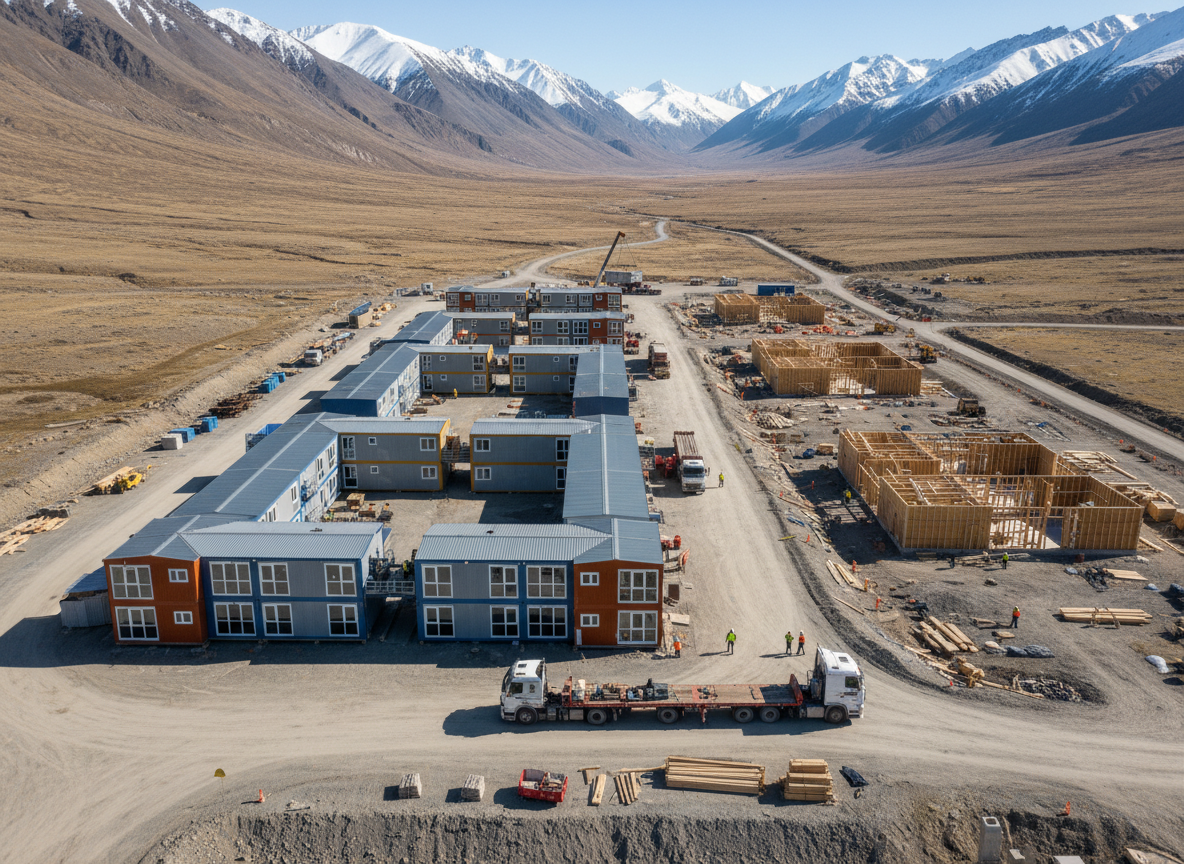
For remote and industrial projects, factory-built modular facilities generally offer a faster deployment schedule compared to traditional site-built construction, often reducing project timelines by 30% to 50%. This acceleration stems from parallel processes: site preparation can occur simultaneously with building fabrication in a controlled factory environment. While site-built construction requires all activities to be sequential on-site, modular approaches minimize on-site labor and associated logistical challenges, which are particularly acute in isolated locations. The decision between these two methods hinges on a detailed evaluation of project-specific needs, including schedule demands, quality requirements, and the unique constraints of the project site.
Schedule and Project Timelines
One of the primary drivers for selecting factory-built modular construction is the potential for significant time savings. In traditional site-built construction, various trades must operate sequentially on-site, often contending with weather delays, labor availability issues, and the logistical complexities of delivering materials to remote locations. This can lead to extended project schedules and increased costs. Factory fabrication, conversely, allows for concurrent activities:
- Parallel Processes: Modules are constructed in a factory while site preparation, such as grading and utility trenching, proceeds simultaneously at the project location. This parallel workflow compresses the overall project schedule.
- Reduced Weather Dependency: Factory work is largely immune to adverse weather conditions, ensuring consistent progress without the delays common in outdoor construction.
- Predictable Milestones: The controlled environment of a factory allows for more predictable production schedules and milestone achievements, offering greater certainty in project planning.
For example, a typical 5,000 square foot facility that might take 8-12 months to construct entirely on a remote site could potentially be fabricated and installed as modular units in 4-6 months. This accelerated timeline is crucial for projects with tight deadlines, such as those in the energy or mining sectors where rapid operational readiness translates directly to revenue generation. Modular buildings for mining and minerals or modular buildings for oil and gas projects often benefit from these efficiencies.
Quality Control and Workmanship
The controlled environment of a manufacturing facility inherently supports higher and more consistent quality control compared to challenging remote site conditions. In a factory, processes can be standardized, and inspections are integrated at multiple stages of fabrication. This structured approach helps in identifying and rectifying potential issues early in the production cycle, before modules are shipped to the site. Key aspects include:
- Controlled Environment: Protection from weather, dust, and other environmental factors that can compromise material integrity and construction quality on an open site.
- Specialized Labor: Access to a stable, skilled workforce in a dedicated facility, reducing reliance on transient or less experienced labor often found in remote areas.
- Repeatable Processes: Use of jigs, templates, and assembly line techniques ensures consistency across multiple modules and projects, leading to uniform quality.
- Integrated Inspections: Quality checks are performed at each stage of assembly, from structural framing to interior finishes, ensuring adherence to specifications before modules leave the factory.
Conversely, site-built construction in remote areas often faces challenges in maintaining consistent quality due to varying site conditions, logistical hurdles in material delivery, and the difficulties of supervising diverse trades in isolated settings. The ability to monitor and manage quality in a factory setting provides a distinct advantage for ensuring the long-term durability and performance of remote facilities.
Site Impact and Logistics
The choice between factory-built and site-built construction has profound implications for the project site itself, particularly concerning environmental impact, safety, and logistical complexity. Site-built projects typically require extensive on-site material storage, waste management, and a larger, longer-term construction footprint.
- Reduced On-Site Activity: Modular construction significantly reduces the number of workers, vehicles, and equipment required on the remote site, thereby minimizing disruption to the local environment and existing operations.
- Waste Reduction: Factory fabrication allows for greater control over material usage and waste generation. Scrap materials can often be recycled or repurposed within the factory, leading to less waste transported to and from the remote site.
- Enhanced Site Safety: With a substantial portion of the work completed off-site, the duration and intensity of hazardous construction activities on the project site are reduced. This contributes to a safer working environment for the remaining on-site crew.
- Logistical Streamlining: Instead of coordinating numerous material deliveries from various suppliers to a remote location, modular construction consolidates logistics to fewer, larger module shipments. This simplifies supply chain management, particularly for remote and isolated site modular buildings.